

- Access by Xinjiang University
Reaction pathway variability in electrochemical conversion reactions for ion batteries
Phys. Rev. Materials 9, 110301 – Published 19 November, 2025
DOI: https://doi.org/10.1103/ynck-qw12
Abstract
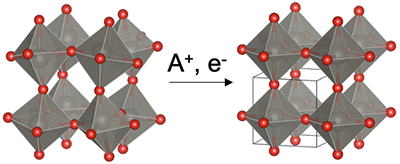
Electrochemical energy storage plays a key role in supporting the continued electrification of the energy grid, transportation, and other technological sectors. Current ion batteries have been successfully implemented in mobile devices and light-duty transport vehicles, but they have insufficient energy densities for higher-power applications such as aviation, heavy-duty vehicles, or the support of intermittent energy sources. The specific capacity of the cathode limits the energy density of an ion battery, which motivates a transition to new cathode chemistries. Conversion materials, in which the redox-active ion is fully reduced in a multielectron reaction, are promising candidates with double to quadruple the specific capacities of commercial intercalation materials. However, the complexity of conversion reactions and associated phase transitions correlate with poor electrochemical reversibility. Here, we provide several examples of candidate conversion materials and highlight unifying features that describe their phase evolution. We argue that materials with structural simplicity, topotactic relationships between reactants and intermediates, and access to metastable structural polymorphs offer opportunities to design a reversible conversion material.
Physics Subject Headings (PhySH)
Collections
This article appears in the following collection:
Functional Materials Through Electrochemical Ion Insertion
The Editors of Physical Review Materials are pleased to present the Collection on Functional Materials Through Electrochemical Ion Insertion, highlighting cutting-edge advances in the theory, synthesis, and structural and physical characterization of dynamic property modulation (e.g. optical, electrical, mechanical, chemical) using electrochemical ion insertion into solid state hosts. The Collection is being guest-edited by Veronica Augustyn and Nina Balke of North Carolina State University (USA). Every article published in this collection underwent a rigorous peer review process, adhering to the same high standards applied to all papers. The Physical Review Materials editorial team managed the peer review and made all editorial decisions.
Article Text
References (73)
- Y.-S. Hu and Y. Lu, Nobel prize for the Li-ion batteries and new opportunities and challenges in Na-ion batteries, ACS Energy Lett. 4, 2689 (2019).
- J. Cabana, L. Monconduit, D. Larcher, and M. R. Palacín, Beyond intercalation-based Li-ion batteries: The state of the art and challenges of electrode materials reacting through conversion reactions, Adv. Mater. 22, E170 (2010).
- F. Eveillard, Q. Loiseleux, R. Porhiel, M. El-Ghozzi, P. Bonnet, M. T. Sougrati, D. Delbegue, and K. Guerin, Using innovative cathode materials in Li batteries working under spacecraft applications, Solid State Ionics 387, 116079 (2022).
- F. Wu and G. Yushin, Conversion cathodes for rechargeable lithium and lithium-ion batteries, Energy Environ. Sci. 10, 435 (2017).
- F. Wang et al., Conversion reaction mechanisms in lithium ion batteries: Study of the binary metal fluoride electrodes, J. Am. Chem. Soc. 133, 18828 (2011).
- X. Hua et al., Revisiting metal fluorides as lithium-ion battery cathodes, Nat. Mater. 20, 841 (2021).
- M. M. Butala, K. R. Danks, M. A. Lumley, S. Zhou, B. C. Melot, and R. Seshadri, MnO conversion in Li-ion batteries: In Situ Studies and the Role of Mesostructuring, ACS Appl. Mater. Interfaces 8, 6496 (2016).
- A. V. der Ven, K. A. See, and L. Pilon, Hysteresis in electrochemical systems, Battery Energy 1, 20210017 (2022).
- R. A. P. Camacho, A.-M. Wu, X.-Z. Jin, X.-F. Dong, X.-N. Li, and H. Huang, Effective carbon constraint of MnS nanoparticles as high-performance anode of lithium-ion batteries, J. Power Sources 437, 226931 (2019).
- J. Li, X.-F. Li, Q.-T. Jiang, R.-X. Duan, G.-Q. Cao, J.-J. Wang, and W.-B. Li, Construction of nanoconfined in N-doped carbon matrix as high-capacity cathodes to boost reversibility of lithium-ion batteries, Rare Metals 44, 1594 (2024).
- M. Rana, V. S. Avvaru, N. Boaretto, V. A. D. L. P. O'Shea, R. Marcilla, V. Etacheri, and J. J. Vilatela, High rate hybrid , CNT fabric anodes for Li-ion batteries: Properties and a lithium storage mechanism study by: In situ synchrotron x-ray scattering, J. Mater. Chem. A 7, 26596 (2019).
- L. Sun, Y. Li, and W. Feng, Metal fluoride cathode materials for lithium rechargeable batteries: Focus on iron fluorides, Small Methods 7, 2201152 (2023).
- K. Cao, T. Jin, L. Yang, and L. Jiao, Recent progress in conversion reaction metal oxide anodes for Li-ion batteries, Mater. Chem. Front. 1, 2213 (2017).
- L. F. Olbrich, A. W. Xiao, and M. Pasta, Conversion-type fluoride cathodes: Current state of the art, Curr. Opin. Electrochem. 30, 100779 (2021).
- M. J. Fallon, A. J. Martinolich, A. E. Maughan, L. C. Gallington, and J. R. Neilson, Low-temperature synthesis of superconducting iron selenide using a triphenylphosphine flux, Dalton Trans. 48, 16298 (2019).
- A. ur Rehman, M. Iftikhar, S. Latif, V. Jevtovic, I. M. Ashraf, A. A. El-Zahhar, E. A. M. Saleh, and S. M. Abbas, Current advances and prospects in NiO-based lithium-ion battery anodes, Sustain. Energy Technol. Assess. 53, 102376 (2022).
- C. Sanchez, L. Rozes, F. Ribot, C. Laberty-Robert, D. Grosso, C. Sassoye, C. Boissiere, and L. Nicole, “Chimie douce”: A land of opportunities for the designed construction of functional inorganic and hybrid organic-inorganic nanomaterials, Comptes Rendus. Chimie 13, 3 (2009).
- J. Gopalakrishnan, Chimie douce approaches to the synthesis of metastable oxide materials, Chem. Mater. 7, 1265 (1995).
- J. Livage, Chimie douce: From shake-and-bake processing to wet chemistry, New J. Chem. 25, 1 (2001).
- J. M. Lee, R. C. Miller, L. J. Moloney, and A. L. Prieto, The development of strategies for nanoparticle synthesis: Considerations for deepening understanding of inherently complex systems, J. Solid State Chem. 273, 243 (2019).
- A. J. Martinolich and J. R. Neilson, Toward reaction-by-design: Achieving kinetic control of solid state chemistry with metathesis, Chem. Mater. 29, 479 (2017).
- B. Shyam, K. W. Chapman, M. Balasubramanian, R. J. Klingler, G. Srajer, and P. J. Chupas, Structural and mechanistic revelations on an iron conversion reaction from pair distribution function analysis, Angew. Chem., Int. Ed Engl. 51, 4852 (2012).
- W. Li, O. J. Borkiewicz, M. Saubanère, M.-L. Doublet, D. Flahaut, P. J. Chupas, K. W. Chapman, and D. Dambournet, Atomic structure of 2 nm size metallic cobalt prepared by electrochemical conversion: An in situ pair distribution function study, J. Phys. Chem. C 122, 23861 (2018).
- V. C. Wu, R. Giovine, E. E. Foley, J. Finzel, M. Balasubramanian, E. Sebti, E. M. Mozur, A. H. Kwon, and R. J. Clément, Unlocking new redox activity in alluaudite cathodes through compositional design, Chem. Mater. 34, 4088 (2022).
- Z. Zhang, J. Qian, W. Lu, C. H. Chan, S. P. Lau, and J.-Y. Dai, In situ TEM study of the sodiation/desodiation mechanism of nanowire with gel-electrolytes, Energy Storage Mater. 15, 91 (2018).
- T. Egami and S. J. L. Billinge, Underneath the Bragg Peaks: Structural Analysis of Complex Materials (Pergamon, New York, 2012).
- X. Wang, S. Tan, X.-Q. Yang, and E. Hu, Pair distribution function analysis: Fundamentals and application to battery materials, Chin. Phys. B 29, 028802 (2020).
- W. Zhang, D. C. Bock, C. J. Pelliccione, Y. Li, L. Wu, Y. Zhu, A. C. Marschilok, E. S. Takeuchi, K. J. Takeuchi, and F. Wang, Insights into ionic transport and structural changes in magnetite during multiple-electron transfer reactions, Adv. Energy Mater. 6, 1502471 (2016).
- Y. Yuan, K. Amine, J. Lu, and R. Shahbazian-Yassar, Understanding materials challenges for rechargeable ion batteries with in situ transmission electron microscopy, Nat. Commun. 8, 15806 (2017).
- K. Karki, L. Wu, Y. Ma, M. J. Armstrong, J. D. Holmes, S. H. Garofalini, Y. Zhu, E. A. Stach, and F. Wang, Revisiting conversion reaction mechanisms in lithium batteries: Lithiation-driven topotactic transformation in , J. Am. Chem. Soc. 140, 17915 (2018).
- Y. Fu, X. Guo, Z. Xu, G. Zhao, C. Xu, Y. Zhu, and L. Zhou, Nanostructure-mediated phase evolution in lithiation/delithiation of , ACS Appl. Mater. Interfaces 13, 28171 (2021).
- X. Hua, P. K. Allan, C. Gong, P. A. Chater, E. M. Schmidt, H. S. Geddes, A. W. Robertson, P. G. Bruce, and A. L. Goodwin, Non-equilibrium metal oxides via reconversion chemistry in lithium-ion batteries, Nat. Commun. 12, 561 (2021).
- X. Ma, M. Zhang, C. Liang, Y. Li, J. Wu, and R. Che, Inheritance of crystallographic orientation during lithiation/delithiation processes of single-crystal nanocubes in lithium-ion batteries, ACS Appl. Mater. Interfaces 7, 24191 (2015).
- K. Qu, Z. Ding, M. Wu, P. Liu, S. Chen, R. Zhu, B. Han, X. Ma, P. Gao, and J. Li, Unraveling atomic-scale lithiation mechanisms in a NiO thin film electrode, J. Mater. Chem. A 8, 25198 (2020).
- R. D. Shannon and R. C. Rossi, Definition of topotaxy, Nature (London) 202, 1000 (1964).
- I. Bonev, On the terminology of the phenomena of mutual crystal orientation, Acta Crystallogr. Sect. A 28, 508 (1972).
- P. M. Woodward, P. Karen, J. S. O. Evans, and T. Vogt, Solid State Materials Chemistry (Cambridge University Press, Cambridge, England, 2021).
- M. Jankousky, H. Chen, A. Novick, and V. Stevanović, All “roads” lead to rocksalt structure, J. Am. Chem. Soc. 146, 23004 (2024).
- F. Lin, D. Nordlund, T.-C. Weng, Y. Zhu, C. Ban, R. M. Richards, and H. L. Xin, Phase evolution for conversion reaction electrodes in lithium-ion batteries, Nat. Commun. 5, 1 (2014).
- K. He, F. Lin, Y. Zhu, X. Yu, J. Li, R. Lin, D. Nordlund, T. C. Weng, R. M. Richards, X. Q. Yang, M. M. Doeff, E. A. Stach, Y. Mo, H. L. Xin, and D. Su, Sodiation kinetics of metal oxide conversion electrodes: A comparative study with lithiation, Nano Lett. 15, 5755 (2015).
- U. Boesenberg, M. A. Marcus, A. K. Shukla, T. Yi, E. McDermott, P. F. Teh, M. Srinivasan, A. Moewes, and J. Cabana, Asymmetric pathways in the electrochemical conversion reaction of NiO as battery electrode with high storage capacity, Sci. Rep. 4, 7133 (2014).
- S. Lee, M. Song, S. Kim, V. Mathew, B. Sambandam, J.-Y. Hwang, and J. Kim, High lithium storage properties in a manganese sulfide anode via an intercalation-cum-conversion reaction, J. Mater. Chem. A 8, 17537 (2020).
- A. Jain, S. P. Ong, G. Hautier, W. Chen, W. D. Richards, S. Dacek, S. Cholia, D. Gunter, D. Skinner, G. Ceder, and K. A. Persson, Commentary: The materials project: A materials genome approach to accelerating materials innovation, APL Mater. 1, 011002 (2013)..
- Y. Ma, Y. Ma, G. Kim, T. Diemant, R. J. Behm, D. Geiger, U. Kaiser, A. Varzi, and S. Passerini, Superior lithium storage capacity of nanoparticles embedded in s-doped carbonaceous mesoporous frameworks, Adv. Energy Mater. 9, 1902077 (2019).
- N. Yamakawa, M. Jiang, B. Key, and C. P. Grey, Identifying the local structures formed during lithiation of the conversion material, iron fluoride, in a Li ion battery: A solid-state NMR, x-ray diffraction, and pair distribution function analysis study, J. Am. Chem. Soc. 131, 10525 (2009).
- L. Li, R. Jacobs, P. Gao, L. Gan, F. Wang, D. Morgan, and S. Jin, Origins of large voltage hysteresis in high-energy-density metal fluoride lithium-ion battery conversion electrodes, J. Am. Chem. Soc. 138, 2838 (2016).
- C. Baerlocher and L. B. McCusker, From Zeolites to Porous MOF Materials - The 40th Anniversary of International Zeolite Conference, Proceedings of the 15th International Zeolite Conference (Elsevier, New York, 2007), pp. 657–665.
- C. Li, K. Chen, X. Zhou, and J. Maier, Electrochemically driven conversion reaction in fluoride electrodes for energy storage devices, npj Comput. Mater. 4, 1 (2018).
- X. Hua, R. Robert, L.-S. Du, K. M. Wiaderek, M. Leskes, K. W. Chapman, P. J. Chupas, and C. P. Grey, Comprehensive study of the conversion reaction mechanism in a lithium ion battery, J. Phys. Chem. C 118, 15169 (2014).
- A. Celik-Kucuk and T. Abe, Electrochemical behavior of as reversible cathode in an organic liquid electrolyte for room-temperature fluoride-shuttle batteries, J. Power Sources 496, 229828 (2021).
- J. Xia, Z. Wang, N. D. Rodrig, B. Nan, J. Zhang, W. Zhang, B. L. Lucht, C. Yang, and C. Wang, Super-reversible cathodes enabled by -coordinated alginate, Adv. Mater. 34, 2205229 (2022).
- Y. T. Teng, S. S. Pramana, J. Ding, T. Wu, and R. Yazami, Investigation of the conversion mechanism of nanosized , Electrochim. Acta 107, 301 (2013).
- J. Tan, L. Liu, S. Guo, H. Hu, Z. Yan, Q. Zhou, Z. Huang, H. Shu, X. Yang, and X. Wang, The electrochemical performance and mechanism of cobalt (II) fluoride as anode material for lithium and sodium ion batteries, Electrochim. Acta 168, 225 (2015).
- M. J. Leesmith, N. R. Halcovitch, and X. Hua, Electrochemical lithiation-induced formation of disordered rocksalt, J. Mater. Chem. A 11, 17027 (2023).
- T. Hatakeyama, N. L. Okamoto, and T. Ichitsubo, Thermal stability of polymorphs, J. Solid State Chem. 305, 122683 (2022).
- R. Fong, J. R. Dahn, and C. H. W. Jones, Electrochemistry of pyrite-based cathodes for ambient temperature lithium batteries, J. Electrochem. Soc. 136, 3206 (1989).
- J. Zou, J. Zhao, B. Wang, S. Chen, P. Chen, Q. Ran, L. Li, X. Wang, J. Yao, H. Li, J. Huang, X. Niu, and L. Wang, Unraveling the reaction mechanism of as a Li-ion battery cathode, ACS Appl. Mater. Interfaces 12, 44850 (2020).
- G. Whang, D. S. Ashby, A. S. Lapp, Y.-C. Hsieh, D. M. Butts, I. V. Kolesnichenko, P.-W. Wu, T. N. Lambert, A. A. Talin, and B. S. Dunn, Temperature-dependent reaction pathways in : Reversibility and the electrochemical formation of , Chem. Mater. 34, 5422 (2022).
- M. M. Butala, V. V. T. Doan-Nguyen, A. J. Lehner, C. Göbel, M. A. Lumley, S. Arnon, K. M. Wiaderek, O. J. Borkiewicz, K. W. Chapman, P. J. Chupas, M. Balasubramanian, and R. Seshadri, Operando studies reveal structural evolution with electrochemical cycling in , J. Phys. Chem. C 122, 24559 (2018).
- T. A. Yersak, H. A. Macpherson, S. C. Kim, V. Le, C. S. Kang, S. Son, Y. Kim, J. E. Trevey, K. H. Oh, C. Stoldt, and S. Lee, Solid state enabled reversible four electron storage, Adv. Energy Mater. 3, 120 (2012).
- C. N. Lininger, A. M. Bruck, D. M. Lutz, L. M. Housel, K. J. Takeuchi, E. S. Takeuchi, A. Huq, A. C. Marschilok, and A. C. West, The systematic refinement for the phase change and conversion reactions arising from the lithiation of magnetite nanocrystals, Adv. Funct. Mater. 30, 1907337 (2019).
- R. C. Hill and K. J. Takeuchi, Elucidating the origins of high capacity in iron-based conversion materials: Benefit of complementary advanced characterization toward mechanistic understanding, Acc. Chem. Res. 58, 463 (2025).
- H. Ren, H. Li, P. Barry, Z. Wang, A. R. Campos, E. S. Takeuchi, A. C. Marschilok, S. Yan, K. J. Takeuchi, and E. Reichmanis, Recent Advances in the Application of Magnetite () in Lithium-Ion batteries: Synthesis, electrochemical performance, and characterization techniques, Chem. Mater. 36, 9299 (2024).
- S. Yu, S. H. Lee, D. J. Lee, Y. Sung, and T. Hyeon, Conversion reaction–based oxide nanomaterials for lithium ion battery anodes, Small 12, 2146 (2016).
- Q. Li, J. Wu, Z. Yao, Y. Xu, M. M. Thackeray, C. Wolverton, and V. P. Dravid, Dynamic imaging of metastable reaction pathways in lithiated cobalt oxide electrodes, Nano Energy 44, 15 (2018).
- D. Larcher, G. Sudant, J.-B. Leriche, Y. Chabre, and J.-M. Tarascon, The electrochemical reduction of in a lithium cell, J. Electrochem. Soc. 149, A234 (2002).
- H. Kim, H. Kim, H. Kim, J. Kim, G. Yoon, K. Lim, W. Yoon, and K. Kang, Understanding origin of voltage hysteresis in conversion reaction for Na rechargeable batteries: The case of cobalt oxides, Adv. Funct. Mater. 26, 5042 (2016).
- L. Luo, J. Wu, J. Xu, and V. P. Dravid, Atomic resolution study of reversible conversion reaction in metal oxide electrodes for lithium-ion battery, ACS Nano 8, 11560 (2014).
- G. Xu, X. Zhang, M. Liu, H. Li, M. Zhao, Q. Li, J. Zhang, and Y. Zhang, Multi-step phase transitions of during galvanostatic lithiation: An in situ transmission electron microscopic investigation, Small 16, 1906499 (2020).
- M. A. Lowe, J. Gao, and H. D. Abruña, In operando x-ray studies of the conversion reaction in lithium battery anodes, J. Mater. Chem. A 1, 2094 (2013).
- H. Chen, R. Schoch, J. Chotard, Y. M. Thiebes, K. Wissel, R. Niewa, M. Bauer, and O. Clemens, Revealing an intercalation nature of high-capacity conversion cathode materials for fluoride-ion batteries by operando studies, Small Methods 9, 500374 (2025).
- E. Levi, D. Aurbach, and C. Gatti, Assessing the strength of metal–metal interactions, Inorg. Chem. 58, 7466 (2019).
- A. R. West, Solid State Chemistry and Its Applications, 2nd ed. (Wiley, New York, 2014).
